
LVP vs. Hardwood: Which Is Right for Your Woodland Home?
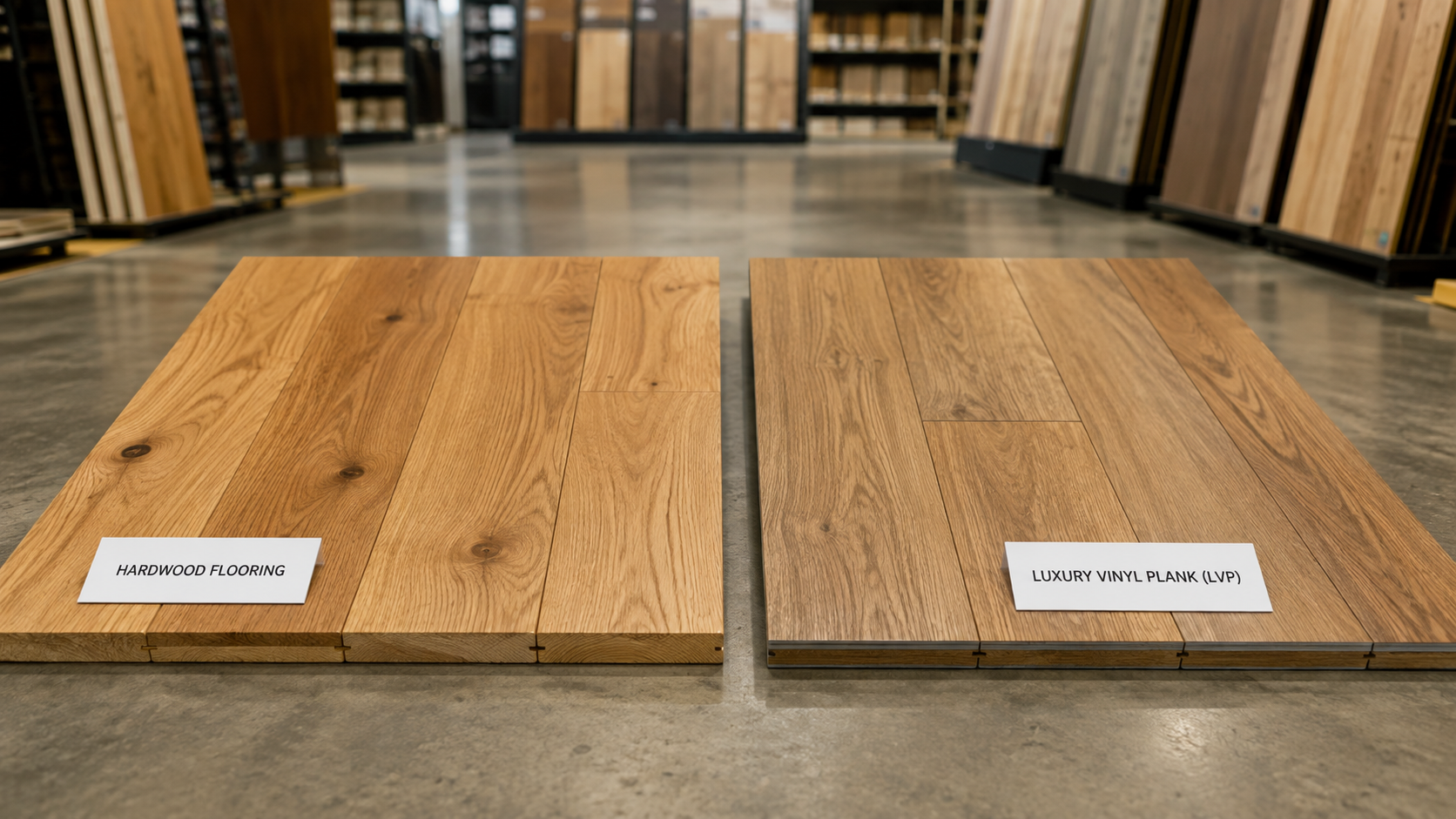
It's one of the most common questions we get from homeowners in Woodland and across the Central Valley: should you go with real hardwood, or luxury vinyl plank? Both have come a long way in the last decade, and both can look genuinely beautiful in the right home. The honest answer is that neither one is universally "better." It depends on the room, your budget, and how your household actually lives day to day.
Here's a straightforward comparison to help you decide.
Cost
LVP is the more budget-friendly option upfront, typically running $3 to $7 per square foot installed, compared to $6 to $12 for solid hardwood. Engineered hardwood falls somewhere in between. If you're flooring a large area or working with a defined budget, that difference adds up quickly across a whole home.
That said, cost isn't the whole picture. Hardwood flooring tends to last significantly longer when properly maintained, which changes the math over a 20 or 30 year horizon.
Durability and Lifespan
This is where the two materials genuinely differ in character rather than just performance. Solid hardwood can be refinished multiple times over its life, often lasting 50 to 100 years with proper care. LVP doesn't get refinished. Instead, it's built to resist scratches, dents, and wear directly through its manufactured surface layer, and a quality LVP floor typically lasts 15 to 25 years before it needs replacing.
If you want a floor that can be restored and updated rather than replaced down the road, hardwood has the edge. If you'd rather install once and not think about refinishing at all for a couple of decades, LVP holds up well without that maintenance step.
Water and Moisture Resistance
This is usually the deciding factor for kitchens, bathrooms, laundry rooms, and Central Valley homes with pets or young kids. LVP is waterproof at the plank level, meaning spills, splashes, and even standing water won't damage it the way they can damage hardwood.
Solid hardwood, even with a good finish, can warp, cup, or stain if water sits on it for too long. That doesn't rule hardwood out of kitchens entirely (plenty of homeowners choose it anyway for the look), but it does mean being more careful about spills and avoiding it in true wet areas like full bathrooms.
Look and Feel
Real hardwood has a warmth and depth that comes from natural wood grain variation. No two boards are exactly alike, and that authenticity is hard to fully replicate. High-end LVP has closed the gap significantly, with realistic embossed textures and photo-quality wood-look finishes that read as convincingly natural from a few feet away.
Underfoot, hardwood tends to feel slightly firmer and cooler, while LVP has a bit more give and often feels warmer, especially over a cushioned underlayment. Neither is objectively better here. It's a matter of personal preference.
Maintenance
LVP is close to maintenance-free: regular sweeping and occasional mopping is usually all it needs. Hardwood requires a bit more care (avoiding excess water, using furniture pads, periodic refinishing every 7 to 10 years) but rewards that care with a floor that can look brand new again decades later, something LVP simply can't offer once it's worn out.
Resale Value
Real hardwood generally carries more weight with home buyers and appraisers, and it's often cited as one of the top flooring choices for return on investment. LVP has become far more accepted in recent years, especially as quality has improved, but it typically doesn't command the same premium that solid hardwood does in a home sale.
Which One Fits Your Home?
For Woodland's Central Valley climate, with hot, dry summers and cooler, occasionally damp winters, both materials perform well when installed correctly. Here's a simple way to think about it: choose hardwood for living rooms, dining rooms, and bedrooms where you want long-term character and the option to refinish later. Choose LVP for kitchens, bathrooms, mudrooms, and any space where water exposure or heavy daily wear is a real factor.
Plenty of homes end up with both: hardwood in the main living spaces, LVP in the wet and high-traffic zones. There's no rule that says your whole house needs to match one material throughout.
Not sure which makes sense for your specific rooms? That's exactly the kind of question we walk through during a free in-home consultation, where we can look at your actual space, your household's habits, and your budget before making a recommendation.
Frequently Asked Questions
They're good at different things rather than one being universally better. LVP wins on water resistance, upfront cost, and low maintenance. Hardwood wins on longevity, resale value, and the ability to be refinished rather than replaced. The right choice depends on the room and your priorities.
Written by the Perez Flooring Team
Family-owned and operated in Woodland, CA, Perez Flooring has installed and restored floors across the Central Valley for over 25 years. Learn more about our story.
Related Articles
Still Deciding Between Hardwood and LVP?
Get a free in-home consultation. We'll look at your space and help you choose the right material, room by room.