
5 Signs Your Hardwood Floors Need Refinishing
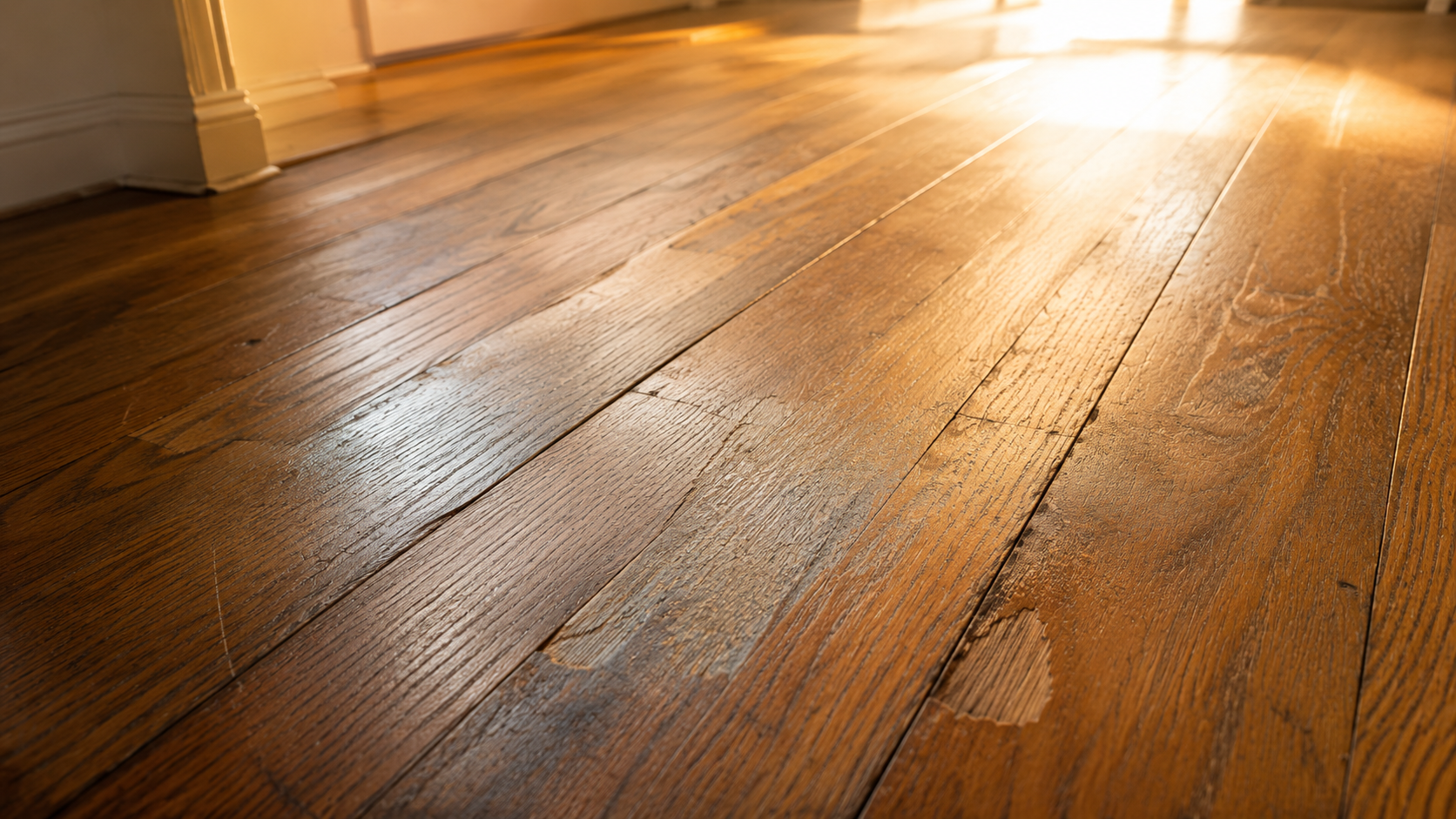
Walk into almost any home with hardwood floors older than ten years, and you'll usually find at least one room where the finish just isn't doing its job anymore. Maybe it's a dull patch by the back door, a web of fine scratches near where the dog naps, or boards that have gone from honey-gold to a tired, washed-out gray. The question we hear most often from homeowners in Woodland and Sacramento isn't "does my floor need work." Most people already suspect that part. It's "do I need to refinish this, or is it time to start over completely?"
Here's how to tell the difference, and five signs that mean refinishing should be on your to-do list this year.
Refinishing vs. Replacement: What's Actually the Difference?
Refinishing means sanding down the existing wood to remove the old, worn finish, then applying new stain (if you want a color change) and fresh protective topcoats. It works because solid hardwood is thick enough to be sanded and re-coated multiple times over its life, which is part of what makes hardwood flooring such a long-term investment. A well-maintained solid hardwood floor can last 50 to 100 years, largely because refinishing keeps resetting the clock on the surface.
Replacement is a different conversation. It's what we recommend when the wood itself, not just the finish, is compromised: boards that are cupped or warped from water exposure, planks that are cracked or structurally damaged, or engineered hardwood with a veneer too thin to sand again. If that's your situation, our floor replacement guide covers what that process looks like.
Most of the time, though, the fix is simpler than people expect. Here's what to look for.
1. Deep Scratches and Gouges That Catch the Light
Every hardwood floor picks up some wear. That's normal, and honestly part of the character of real wood. What we're looking for here is the difference between surface-level scuffs and scratches that have actually cut into the wood.
Run your fingernail across a scratch. If it catches or snags, you're likely feeling exposed wood grain, not just a mark in the topcoat. Deep gouges from moved furniture, dragged appliances, or a determined dog are the most common culprits. A few isolated marks might be fixable with a touch-up kit, but once scratches are widespread across a room (especially in the traffic pattern between doorways), refinishing is almost always more cost-effective than spot repairs.
2. Water Stains, Dark Spots, or a Grayish, Washed-Out Look
Sun exposure and years of foot traffic slowly break down the protective topcoat, and once that happens, the wood underneath starts to show it, often as a dull, grayish cast that no amount of mopping will fix. You might also notice darker spots near sinks, entryways, or windowsills where moisture has had repeated contact with the floor.
There's an important distinction here: light discoloration from finish wear usually sands out completely during refinishing. Dark black staining that's penetrated deep into the wood grain, the kind that comes from standing water or a slow, unnoticed leak, sometimes doesn't sand out fully because the stain has gone past the surface. If you're seeing that kind of deep, localized staining, it's worth having it assessed before you commit to a refinish, since it may point to an underlying moisture issue that needs water damage restoration first.
3. The Finish Feels Rough, Dull, or Sticky Underfoot
This is one homeowners notice with their feet before their eyes. Walk across your floor barefoot, especially through hallways and in front of the kitchen sink. If the texture changes (rougher in some spots, tackier in others, or just noticeably less smooth than it used to be), the protective topcoat is wearing unevenly.
A simple test: drop a few beads of water on the floor in a high-traffic area. If the water beads up and sits on the surface, your finish is still doing its job. If it soaks in quickly and darkens the wood within a minute or two, the finish has worn through and the wood itself is now exposed to whatever spills, dirt, or moisture comes its way. That's not just a cosmetic problem. It's the point where floors start absorbing damage they can't easily recover from.
4. Visible Gaps Are Widening Between Boards
Small seasonal gaps are completely normal. Hardwood expands and contracts with humidity, and most floors show slightly more space between boards in the dry Central Valley summer than in winter. What's worth paying attention to is gapping that keeps getting wider year over year, or that doesn't close back up when the seasons change.
Persistent, worsening gaps can mean the wood has dried out more than it should, or that there's movement happening in the subfloor beneath it. Refinishing won't correct a subfloor problem on its own. If that's what's going on, it's worth having your subfloor checked as part of a floor leveling assessment before refinishing, so you're not just cosmetically fixing a floor that has a structural cause underneath it.
5. You Can See Bare Wood in Heavy-Traffic Areas
This is the clearest sign that refinishing has moved from "nice to do" to "should do soon." Front entryways, the path in front of the kitchen sink, and hallways between bedrooms take the most abuse in any home, and they're usually the first spots where the finish wears through completely, leaving raw, unprotected wood exposed.
Unfinished wood absorbs moisture, dirt, and stains almost immediately, and once grime works its way into open wood grain, it's much harder to remove than in wood that's still protected by a topcoat. If you can see actual bare wood texture rather than a smooth, sealed surface, that's the point where waiting starts costing you more than acting.
What Professional Refinishing Actually Involves
A full refinish typically involves several passes of sanding with progressively finer grits to remove the old finish and smooth the wood, followed by staining (if you're changing the color or refreshing the existing tone), and finally multiple coats of protective finish with drying time between each one.
It's a process that rewards experience. Uneven sanding pressure leaves visible swirl marks and low spots that show up under certain lighting. Missing a pass with a finer grit leaves the finish looking cloudy instead of clear. And dust control matters more than most people expect: professional crews use dustless sanding systems that contain the fine wood dust that would otherwise settle into every corner of your home for weeks. It's one of the main reasons refinishing is a project most homeowners hand off rather than tackle themselves.
How Often Should Hardwood Floors Be Refinished?
As a general rule of thumb, expect to refinish every 7 to 10 years in higher-traffic homes, and closer to 10 to 15 years in lower-traffic spaces like formal dining rooms or guest bedrooms. Solid hardwood typically has enough thickness to be refinished 4 to 6 times over its lifetime, since each sanding removes only a fraction of a millimeter of wood. Engineered hardwood is more limited, usually 1 to 3 refinishes, depending on how thick the top wood veneer layer is.
If any of these signs sound familiar, the most useful next step is a straightforward, no-pressure look at your floors: not a sales pitch, just an honest read on whether refinishing, minor repair, or replacement makes the most sense for your specific situation.
Ready for an Assessment?
Our team has walked through this exact conversation with homeowners across Woodland, Sacramento, and the surrounding Central Valley for over 25 years, and we'll always tell you the option that actually makes sense for your floor, not just the most expensive one.
Frequently Asked Questions
Technically, yes. Rental sanders are available at most hardware stores. In practice, DIY refinishing is one of the more unforgiving home projects to get right. Uneven sanding is difficult to fix once it happens, and it's easy to sand through a thin veneer on engineered hardwood without realizing it until the damage is done. Most homeowners find that professional refinishing costs less in the long run than correcting a DIY attempt gone wrong.
Written by the Perez Flooring Team
Family-owned and operated in Woodland, CA, Perez Flooring has installed and restored floors across the Central Valley for over 25 years. Learn more about our story.
Related Articles
Not Sure If You Need a Refinish or Replacement?
Get a free, honest assessment from our hardwood specialists: no pressure, no upsell, just the answer that's right for your floor.