
DIY vs. Professional Carpet Installation: What You Need to Know
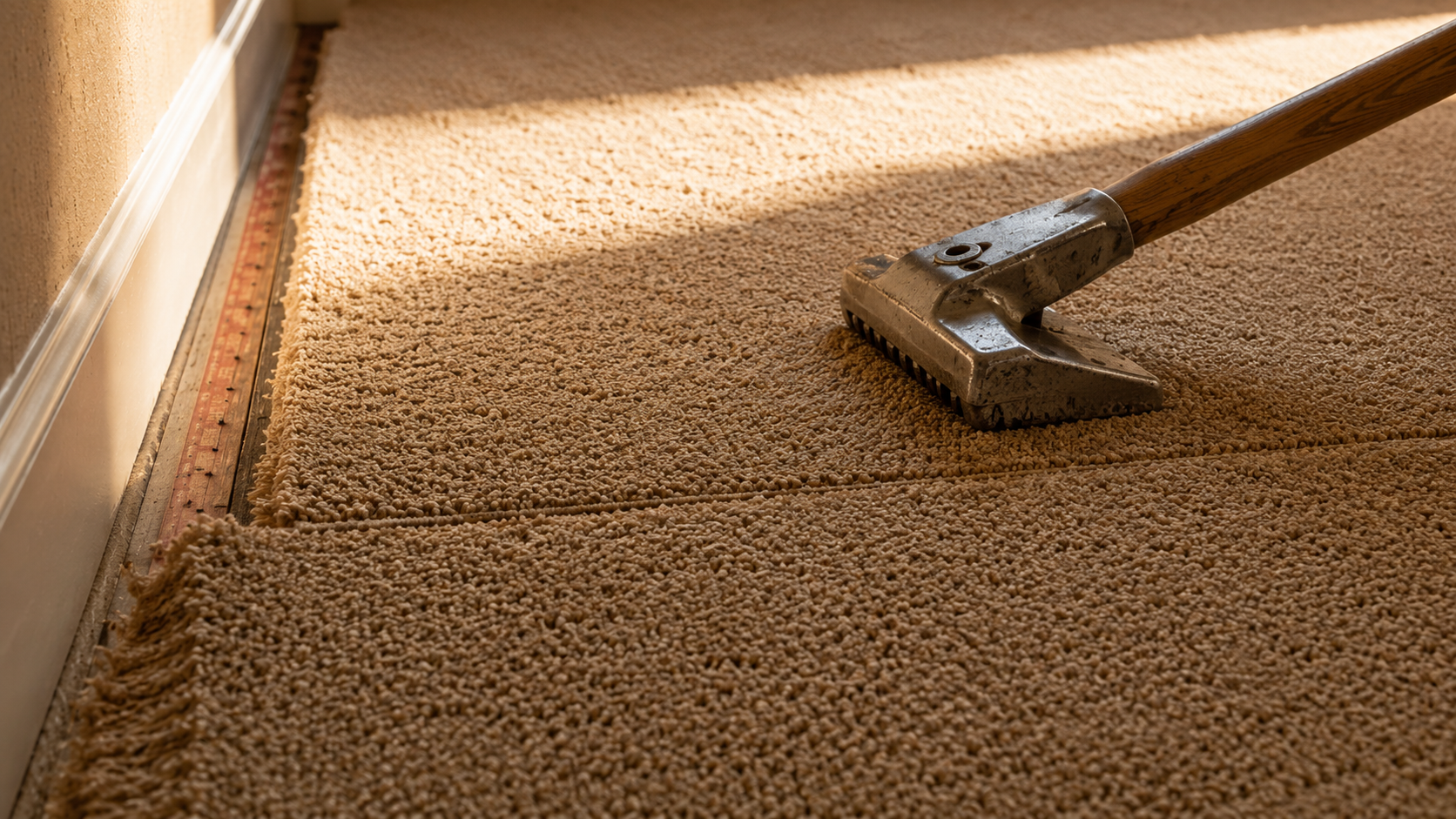
Carpet looks like one of the more approachable flooring projects to tackle yourself. It rolls out flat, there's no sanding or curing involved, and rental stores make the tools look easy enough to use. Then people actually start the project, and the gap between "looks simple" and "is simple" becomes obvious fast.
Here's an honest look at what separates a DIY carpet job from a professional one, and where that difference actually matters.
What Professional Installation Actually Involves
Carpet installation has more technical steps than most people expect. It starts with tack strips nailed around the room's perimeter, followed by padding cut and secured to the subfloor. The carpet itself gets rough-cut oversized, then stretched using a power stretcher (not just pulled by hand) to achieve the tight, wrinkle-free tension that keeps carpet looking good for years instead of rippling within months.
Seaming is its own skill entirely. Most rooms require at least one seam where carpet widths meet, and a well-done seam is nearly invisible, with pattern and pile direction matched precisely. A poorly done seam is one of the most obvious signs of an amateur install, visible as a slightly raised line or mismatched texture that catches your eye every time you walk past it.
Common DIY Mistakes (and Why They're Hard to Fix)
The single most common DIY carpet mistake is under-stretching. Without a proper power stretcher, carpet is nearly impossible to pull tight enough by hand, and under-stretched carpet develops visible ripples and waves within weeks or months, especially in high-traffic paths. Unfortunately, this isn't a quick fix once furniture is back in the room. Correcting it means pulling the carpet back up and restretching it properly, which is essentially redoing the job.
Seam placement and quality is the second major issue. Seams in the wrong location (like directly in a doorway or high-traffic walkway) wear faster and become more visible over time. Poorly glued or heat-taped seams can separate entirely, creating a gap that catches shoes and gets worse with every step.
Padding mistakes are less visible but just as costly. Using the wrong padding thickness or density for your specific carpet type affects both comfort and how long the carpet lasts. Padding that's too thick can actually void some carpet warranties, since it changes how the fibers flex under weight.
The Real Cost Difference
DIY carpet installation looks cheaper on paper: you're paying for materials and tool rental instead of labor. But that comparison misses a few real costs. Tool rental for a proper power stretcher, knee kicker, and seaming iron typically runs $50 to $100 for a weekend, and that's before accounting for the carpet waste that comes from imprecise DIY cutting, which professional installers minimize through experience and better layout planning.
Then there's the cost of getting it wrong. If ripples, gaps, or a failed seam show up months later, redoing the job means paying for a professional correction anyway, on top of what you already spent on the DIY attempt. For most homeowners, the total cost gap between DIY and professional carpet installation ends up narrower than expected once tool rental, material waste, and correction risk are factored in.
Tools and Skills You'd Need for DIY
A legitimate DIY carpet job requires a power stretcher (not just a knee kicker, which alone can't achieve proper wall-to-wall tension), a carpet cutter designed for straight, controlled cuts, a seaming iron and seam tape for any room requiring more than one carpet width, and a stair tool for tucking edges cleanly along baseboards. Beyond the tools themselves, there's a real learning curve to using a power stretcher correctly and cutting a clean, tight seam, skills that installers typically build over dozens of jobs, not one.
When DIY Might Make Sense
Small, simple rooms with no seams required (meaning the room is narrower than your carpet roll width) and straightforward, rectangular layouts without stairs or complex transitions are the most realistic candidates for a DIY attempt. Closets and small guest bedrooms fall into this category more often than living rooms or primary bedrooms.
When to Definitely Call a Professional
Any room requiring a seam, stairs (which involve their own specialized techniques entirely separate from flat-room installation), irregular room shapes, or a whole-home project are all situations where professional installation reliably pays for itself. The cost of a botched seam, poorly stretched carpet in a large room, or improperly finished stairs tends to far exceed what professional installation would have cost in the first place.
If you're weighing your specific project, it's worth getting a free estimate before deciding. Knowing the real cost of professional installation for your exact rooms often makes the decision clearer than guessing based on rental prices alone.
Frequently Asked Questions
You can, but it's not recommended for anything beyond a very small room. Without proper stretching, carpet develops ripples and loose spots within weeks, especially along walls and in high-traffic areas. A knee kicker alone can position carpet but can't achieve the wall-to-wall tension a power stretcher provides.
Written by the Perez Flooring Team
Family-owned and operated in Woodland, CA, Perez Flooring has installed and restored floors across the Central Valley for over 25 years. Learn more about our story.
Related Articles

Ready for Professionally Installed Carpet?
Get a free estimate. We'll stretch it right, seam it clean, and make sure it looks good for years, not months.